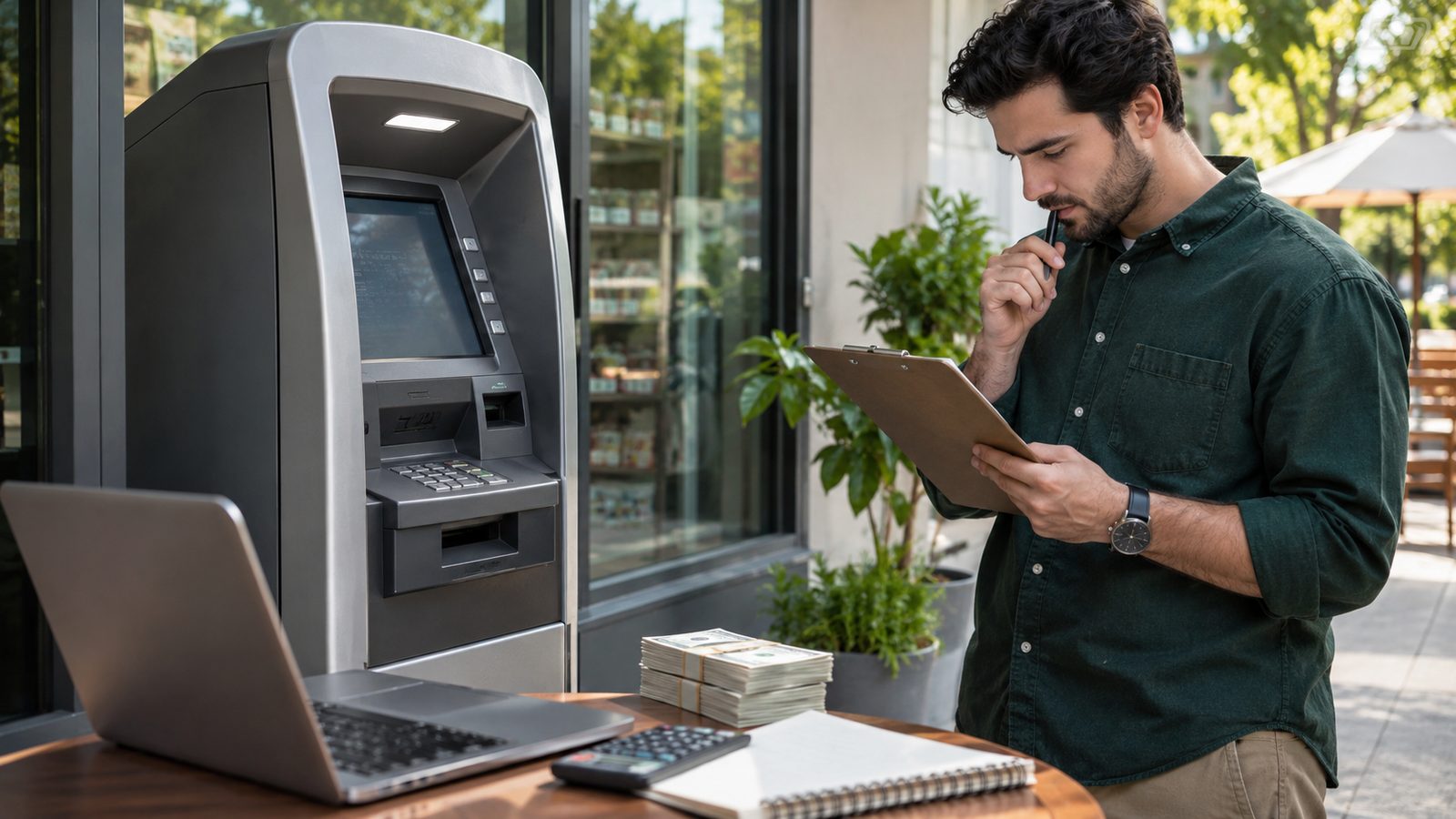
Buying a cash machine usually requires more money than the advertised equipment price suggests. ATM cost for a new retail unit commonly starts around $2,400 to $3,300 in 2026. Your complete startup budget can reach $5,000 to $10,000 after cash funding and setup. A basic indoor machine sits near the lower end of that range. Larger, premium, or through-the-wall models can exceed $7,000 before installation. Business owners should compare the complete investment rather than the hardware price alone. Direct answer: A new retail cash machine generally costs about $2,400 to $5,000 in the United States. Through-the-wall models can exceed $7,000. Buyers may also need installation, connectivity, maintenance, and several thousand dollars of working cash.
2026 Cash Machine Costs at a Glance
| Cost category | Typical 2026 planning range | What to know |
|---|---|---|
| Basic new retail machine | $2,400–$3,300 | Common choice for stores and small businesses |
| Premium indoor machine | $3,000–$5,000+ | Larger displays, capacity, or upgraded features |
| Used or refurbished machine | About $1,800–$2,300+ | Lower price, often shorter warranty |
| Through-the-wall unit | $4,500–$7,700+ | Equipment price before construction |
| Simple installation | About $200–$500 | Varies by location and mounting needs |
| Initial working cash | Often $2,000–$8,000 | Still belongs to the owner |
| Cellular connectivity | Around $15–$20 monthly | Useful when wired internet is unavailable |
| Repairs and supplies | Variable | Depends on age, warranty, traffic, and service plan |
Prices differ between sellers, models, and included services. National ATM Systems lists new machines from roughly $2,395, while ATM Brokerage lists several models between $2,345 and $3,312. Premium and through-the-wall units can cost considerably more.
Key Takeaways
* Many new freestanding retail machines cost roughly $2,400 to $3,300. * Premium equipment can reach $5,000 or more. * Through-the-wall machines may exceed $7,000 before construction costs. * Working cash should not be confused with an operating expense. * Installation, internet access, paper, repairs, and processing can affect ownership costs. * Used equipment lowers the entry price but can increase repair risk. * Businesses should calculate expected transactions before purchasing equipment.
What Determines ATM Cost in the United States?
Machine design creates the largest price difference between models. A simple indoor freestanding unit costs less than weather-resistant or through-the-wall equipment. Higher cash capacity can also increase the purchase price. Screen size, locking systems, cash cassettes, and contactless readers can change the final price. Buyers may also pay more for enhanced cabinets or security features. Factory upgrades are usually easier to budget before installation. Brand choice matters because manufacturers price models differently. Genmega and Hyosung are common names in independent U.S. deployments. Retailers should compare warranty coverage alongside the purchase price. Shipping can create another difference between apparently similar offers. Some sellers include freight within the advertised price. Others charge delivery, lift-gate service, programming, or installation separately.
New Versus Used Equipment
Used equipment can reduce the initial investment substantially. Current seller listings show refurbished units beginning below many new machines. That lower purchase price can help businesses test a location with less capital. The tradeoff is usually warranty coverage and remaining service life. A seller may provide only several months of warranty protection on refurbished hardware. New equipment often carries longer manufacturer coverage. Older hardware also deserves a compatibility check before purchase. Payment-network and security requirements change over time. Confirm that the model can support current processing requirements before paying. For a first location, new equipment can simplify budgeting and support. Used hardware may suit experienced operators who can assess its condition. The cheapest machine is not automatically the lowest-cost choice.
How Much Cash Do You Need to Start?
The money inside the machine is working capital rather than a normal expense. Customers withdraw your cash, and transaction settlement returns those funds through the payment system. You still need enough available money to keep the terminal stocked. A small location might begin with several thousand dollars. Busy locations can require more because withdrawals happen faster. Refill frequency also changes how much working capital you need. Consider a location using $3,000 between cash-loading visits. That money remains tied to operations even though it remains your asset. Your startup plan should separate this amount from equipment and setup expenses. Business owners should also keep operating money separate from personal funds. Marketinic’s guide to choosing a bank account explains factors such as fees and business banking access. A dedicated account can also make settlements easier to track.
Installation and Setup Costs
A simple indoor installation can be relatively inexpensive. The unit normally needs power, a secure position, and a reliable network connection. Bolting the cabinet to a suitable floor can also improve physical security. Current industry guides place straightforward installation around a few hundred dollars. More complicated projects can cost far more. Through-the-wall installations may require construction, electrical work, weatherproofing, and structural modifications. Internet access is another requirement. Many businesses connect through existing Ethernet service. Cellular routers provide an alternative where a wired connection is unavailable. Ask vendors exactly what their quoted price includes. Programming, shipping, setup support, and installation may be bundled differently. Written quotes make competing offers easier to compare.
Ongoing Costs After Purchase
Ownership does not end with the equipment purchase. Receipt paper, connectivity, maintenance, and occasional replacement parts create continuing expenses. Service requirements usually increase as equipment ages. Processing arrangements can also affect the economics. Some providers advertise processing without a monthly fee under certain conditions. Other agreements may include transaction charges or different revenue-sharing terms. Read every processing agreement before signing. Focus on monthly fees, transaction charges, termination terms, and settlement timing. Marketinic’s merchant services overview provides useful background on payment processing arrangements. Insurance and security expenses can also matter. Risk differs between an indoor machine near employees and an unattended outdoor location. Owners should discuss appropriate coverage with a qualified insurance professional.

Accessibility and Compliance Expenses
U.S. accessibility requirements can affect equipment selection and installation. Department of Justice standards include requirements concerning controls, speech output, displays, and Braille instructions. Location and reachable operating areas also matter. Buying appropriate equipment from the start can reduce expensive changes later. Confirm accessibility specifications before installing an older or refurbished terminal. Installation should also preserve the required accessible route. Federal rules also address fee disclosure. Consumers must receive the applicable fee amount electronically or on paper before completing a charged transaction. Operators should confirm that their processor and software handle required disclosures. Security standards affect processing systems as well. PCI requirements address secure PIN processing and cryptographic controls within the payment ecosystem. Your processor should explain the responsibilities applying to your arrangement.
Can a Cash Machine Pay for Itself?
Revenue normally comes from surcharges paid by users. The owner may keep the surcharge or share it with the host location. Processing agreements can also affect the amount retained. Suppose a machine completes 100 withdrawals monthly with a $3 surcharge. That creates $300 in gross monthly surcharge revenue before applicable splits and expenses. This example is planning math rather than an expected performance guarantee. Location quality has a major effect on transaction volume. Cash-heavy venues, convenience stores, bars, and certain service businesses can generate stronger usage. Poorly placed machines can remain unprofitable despite inexpensive hardware. Before buying, estimate realistic monthly withdrawals for the proposed location. Compare projected income with equipment, maintenance, and servicing costs. Marketinic’s buying a business guide uses similar due-diligence principles for evaluating business investments.
Buying Versus Free Placement
Purchasing gives the business greater control over the machine and potential surcharge revenue. It also requires equipment capital and operational responsibility. Maintenance and cash management normally remain with the owner. Free-placement arrangements work differently. A provider may supply, service, and fund the equipment without charging the host upfront. The host generally receives an agreed share of the transaction revenue. This approach lowers financial risk but also reduces control and revenue potential. Contract terms determine the actual economics. Compare ownership and placement offers using the same expected transaction volume. Businesses already evaluating payment technology should consider the full customer payment setup. Marketinic’s restaurant POS comparison demonstrates why hardware and processing costs should be reviewed together. The same principle applies here.
A Practical Startup Budget Example
Consider a small U.S. retailer purchasing a new indoor unit for $2,700. Assume installation costs $350 and the first working cash load equals $3,000. The initial capital requirement becomes roughly $6,050 before smaller operating expenses. That does not mean the business spent $6,050 permanently. The $3,000 cash load remains an asset circulating through withdrawals and settlements. The true equipment and setup spending in this example equals about $3,050. Adding a reserve for repairs can improve planning. A business might also budget for connectivity and receipt supplies. Keeping these categories separate makes expected returns easier to measure. Someone treating machine ownership as a separate income activity should track every expense. Marketinic’s self-employment guide covers startup costs and income models for independent work. Accurate records become especially useful when operating several locations.
How to Compare Machines Before Buying
Start by matching equipment to expected traffic rather than choosing the cheapest listing. A lower-volume store may not need large cash capacity. A busy location can benefit from fewer refill visits. Compare warranty length and technical support next. Ask whether shipping, programming, and installation help are included. Get any promised service coverage in writing. Then review processing requirements before sending payment. Confirm supported connectivity, settlement procedures, and surcharge arrangements. Ask what happens if you later switch processors. Finally, calculate your complete first-year budget. Include hardware, installation, supplies, connectivity, maintenance reserves, and working capital. This figure gives you a more useful comparison than the machine price alone.
Frequently Asked Questions
What is the average ATM cost in 2026?
Many new retail models currently fall around $2,400 to $3,300. Premium indoor models and upgraded configurations can cost $5,000 or more. Through-the-wall equipment may exceed $7,000 before installation.
How much does a used machine cost?
Refurbished equipment can start around $1,800 to $2,300, depending on condition and model. Prices vary widely between sellers. Check warranty coverage and processing compatibility before buying.
How much cash should I put inside?
Several thousand dollars is common for a starting cash load. The right amount depends on transaction volume and refill frequency. That cash remains your money and circulates through settlements.
Are there monthly ownership fees?
There is no single universal monthly fee. Connectivity, processing, maintenance, insurance, and supplies can create recurring costs. Your processor’s contract determines several of these charges.
Is buying one profitable?
Profitability depends largely on transaction volume and the surcharge retained by the owner. A strong location can recover the equipment investment faster. A weak location may never produce an attractive return.
Is free placement cheaper than buying?
Free placement generally requires no equipment purchase from the host business. The provider usually retains part of the surcharge income. Buying requires more capital but can provide greater control and revenue.
Bottom Line
For most U.S. small businesses, planning around $2,400 to $3,300 for a standard new unit is reasonable. Your complete startup requirement can be much higher after working cash and installation. Through-the-wall projects require an especially careful budget. Compare equipment price, warranty, processing, location traffic, and cash requirements before committing. Request written quotes from multiple suppliers using the same requirements. The best purchase is the one supported by realistic transaction economics. —