
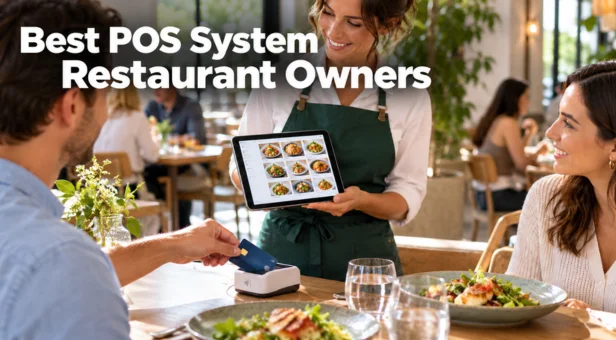
Choosing the best POS system for restaurant operations involves more than comparing monthly software prices. Your service model, payment volume, hardware needs, and expansion plans can change the answer. For many U.S. full-service restaurants, Toast offers the strongest all-around restaurant-specific package.
A smaller café or food truck may get better value from Square instead. Multi-location operators may prefer Lightspeed because its management and reporting tools go deeper. This guide compares seven leading options using current U.S. features, pricing, and operating fit.
Direct answer: Toast is our best overall restaurant choice for 2026 because it combines ordering, payments, hardware, reporting, and restaurant-focused tools. Square is better for many smaller operations seeking low startup costs. Lightspeed deserves consideration when advanced reporting, inventory, or multi-location control matters most.
Restaurant POS Options at a Glance
| Platform | Best Fit | Published Software Starting Point | Main Strength | Main Limitation |
|---|---|---|---|---|
| Toast | Full-service and fast-casual | $0 eligible Starter POS plan from $69/month | Restaurant-specific ecosystem | Approved hardware and integrated payment structure |
| Square | Cafés, food trucks, smaller restaurants | $0; Plus $49/location monthly | Low entry cost and simple setup | Complex operations may need more tools |
| Lightspeed | Multi-location and data-focused operators | $69/month | Reporting and operational depth | Higher tiers become expensive. |
| TouchBistro | Table-service restaurants using iPads | $69/month | Front-of-house restaurant workflow | Several functions require add-ons. |
| SpotOn | Independent restaurants wanting flexible packages | $0 or $55/station monthly | Published processing options and support | Hardware and implementation can raise costs. |
| Clover | Operators wanting configurable hardware | Quote-based restaurant packages | Hardware and app ecosystem | Pricing can depend on package and sales channel |
| Shift 4 Dine | Restaurants comparing bundled restaurant technology | Promotional and quote-based | Broad restaurant toolset | Carefully review contract and payment terms. |
Prices can change, and advertised software fees rarely show the complete cost. Over several years, processing, hardware, implementation, add-ons, and contract terms can matter more. Always request a written proposal using your restaurant’s actual sales volume.
How We Chose the Best POS System for Restaurant Operations
A useful comparison should reflect what happens during service, not only what appears on a pricing page. We prioritized ordering workflows, kitchen connections, payment costs, offline options, reporting, hardware, and expansion capabilities. We also considered whether current pricing information was available from the providers.
Payment processing deserves particular attention because small percentage differences can become substantial at higher sales volumes. Marketinic’s coverage of merchant services and payment processing explains why payment structure deserves separate review. Software that looks inexpensive can become costly when transaction fees and required services are included.
Our ranking also favors clear fits instead of declaring one platform perfect for every business. A counter-service café needs different technology from a 200-seat restaurant with coursing and handheld ordering. Multi-unit groups introduce another layer of reporting, permissions, menus, and inventory requirements.
1. Toast: Best Overall for Full-Service Restaurants
Toast earns our top position because its product is designed around restaurant workflows. Current published pricing includes an eligible Starter option at $0 per month and a Point of Sale plan starting at $69 per month. Hardware, implementation, additional products, and payment terms affect the final bill.
Its biggest advantage is how many restaurant functions can stay within one connected ecosystem. Operators can combine point-of-sale, online ordering, restaurant hardware, reporting, and optional management products. That approach can reduce the number of separate vendors a growing restaurant must coordinate.
Toast fits full-service restaurants, busy fast-casual concepts, and operators wanting restaurant-specific hardware and software. Its main drawback is reduced flexibility around compatible equipment and payment arrangements. Buyers should compare a complete multi-year quote before committing.
Verdict: Toast is our strongest overall recommendation for a typical U.S. full-service restaurant. It combines restaurant specialization with enough product depth to support growth. Smaller concepts with simpler menus may not need everything it offers.
2. Square: Best for Small Restaurants and Cafés
Square is a strong starting point when cost and ease of setup carry extra weight. Its U.S. restaurant pricing currently includes a $0 Free plan, a $49 monthly Plus plan, and $149 Premium pricing. Published card-present rates vary across those plan levels. The platform covers payments, menu management, online ordering, team functions, and restaurant reporting.
In some configurations, restaurants can also use compatible existing equipment rather than replacing everything immediately. Square says its standard pricing requires no long-term contract, though custom arrangements may differ. Square makes particular sense for coffee shops, bakeries, food trucks, counters, and smaller fast-casual businesses.
More complicated full-service operations may outgrow its simpler configurations. Compare necessary staff, inventory, kitchen, and reporting features before choosing the free tier.
Verdict: Choose Square when you want a low-risk entry point and uncomplicated daily workflows. Its free starting level can keep fixed software costs low. Processing expenses still need to be modeled against expected annual card sales.
3. Lightspeed Restaurant: Best for Multi-Location Control
Lightspeed becomes more compelling as restaurant operations become more complicated. Its current U.S. plans show Starter at $69, Essential at $189, and Premium at $399. Enterprise arrangements receive customized pricing. Higher plans include menu controls, floor plans, reporting, takeout, delivery, and multi-location management. The product lineup also includes advanced inventory tools.
Its kitchen display technology currently lists an additional $30 monthly charge per screen. The higher subscription cost means a single simple café may find cheaper alternatives. Groups needing stronger reporting, inventory visibility, or centralized operations have a clearer reason to pay more. The value depends on whether those management capabilities replace other software expenses.
Verdict: Lightspeed is our preferred option for data-focused operators and growing restaurant groups. It becomes easier to justify when centralized management saves significant administrative work. Smaller restaurants should compare its total subscription cost with Toast and Square.
4. TouchBistro: Best for Table-Service Simplicity
TouchBistro remains focused specifically on restaurants rather than general retail businesses. Its core point-of-sale software currently starts at $69 per month. The Essentials Bundle, with hardware and payments, starts at $119 per month. The standard software includes menu management, reporting, floor plans, table management, staff tools, and support. Restaurants can add products covering kitchen displays, reservations, online ordering, loyalty, marketing, and labor.
Those additions can make the platform more complete, but they can also increase monthly spending. TouchBistro suits table-service businesses that value straightforward front-of-house management. Owners should build their quote around every feature required from opening day. Comparing only the $69 starting price may understate the eventual cost.
Verdict: TouchBistro deserves a shortlist position for independent table-service restaurants. Its restaurant focus keeps the workflow relevant to servers and managers. Get itemized pricing for every planned add-on before deciding.
5. SpotOn: Best for Transparent Package Comparison
SpotOn gives operators several clearly different ways to structure their restaurant package. Its All-In option advertises $0 software and hardware per station with higher published processing rates. POS Essentials costs $55 per station monthly and lists lower card-present processing.
That structure lets restaurants compare higher transaction costs against higher fixed monthly expenses. Some packages include hardware and implementation charges, so don’t judge either model by software price alone. High-volume businesses can also request customized arrangements.
SpotOn offers ordering, payments, table layouts, menu tools, reporting, and round-the-clock support. Extra products cover areas such as online ordering, scheduling, reservations, marketing, and profitability analysis. This breadth can suit independents looking for one restaurant-focused vendor.
Verdict: SpotOn is worth pricing when you want several package structures to compare. Run each option using your real monthly card volume. That calculation can reveal which advertised plan is genuinely cheaper.
6. Clover: Best for Hardware Flexibility
Clover offers restaurant packages for both full-service and quick-service businesses. Its current restaurant pages present Starter, Standard, and Advanced hardware configurations. Clover directs buyers to contact sales for current restaurant package pricing. The platform combines payments with employee tools, reporting, business management features, and optional applications. Its broad hardware ecosystem can appeal to operators who want multiple counter and mobile device options.
The final economics depend heavily on the exact package and agreement. Clover deserves extra contract review because offers can differ depending on how the system is purchased. Request hardware ownership details, software charges, processing terms, and cancellation conditions in writing. Compare the combined cost rather than focusing on the terminal price.
Verdict: Clover works best for buyers who value hardware choice and are prepared to compare proposals carefully. It can support many restaurant formats. Pricing transparency is less immediate than Square’s published plan structure.
7. Shift4 Dine: Best Alternative Bundled Platform to Compare
Shift4 renamed SkyTab POS to Shift4 Dine in May 2026. The company says the rebrand did not change the underlying interface or existing core operations. Its restaurant platform covers ordering, reporting, payments, reservations, loyalty, and related management features. Current promotional material advertises waived monthly fees for 12 months and $0 upfront hardware costs under qualifying conditions.
Those terms are promotional rather than permanent standard pricing. Restaurants should request the complete post-promotion economics before comparing it with other providers. Shift4 Dine may appeal to operators seeking a broad restaurant package with integrated payments. The important question is what happens after introductory incentives expire. Operators should get written confirmation of processing, contract terms, device conditions, and long-term software costs.
Verdict: Include Shift4 Dine when gathering competitive restaurant technology quotes. Its current bundle can look attractive at the start. Make the buying decision using full-term costs instead of promotional savings.
What Features Should a Restaurant POS Include?
A modern platform should reliably accept payments, route orders, manage menus, and provide usable sales reporting. Full-service restaurants may also need table maps, coursing, split checks, handheld ordering, kitchen displays, and reservations. Quick-service concepts often place greater value on speed, kiosks, digital ordering, and simple employee training.
Integration with bookkeeping software can remove repetitive financial work after each service period. Marketinic’s guide to modern business accounting systems explains how connected sales data can improve bookkeeping workflows. Check whether your shortlisted platform connects directly with your existing accounting product.
Offline operation also deserves attention before signing. Internet interruptions should not bring every payment and ordering process to a stop. Ask each provider what remains functional offline and what happens to transactions after connectivity returns.
How Much Does a Restaurant POS Really Cost?
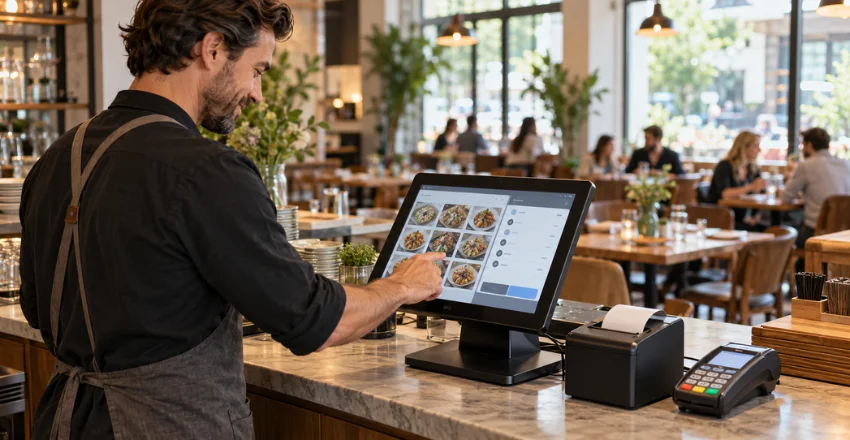
Software subscriptions represent only one part of ownership cost. Restaurant technology expenses commonly include hardware, processing, implementation, training, integrations, and optional operational products. Toast likewise identifies software, hardware, payment processing, and implementation among the major cost categories.
Consider a restaurant that processes $100,000 in card sales monthly. A difference of only 0.20 percentage points equals about $200 each month before per-transaction charges. That equals roughly $2,400 annually, which can outweigh differences between software subscriptions.
Create a three-year estimate for every vendor you shortlist. Include every terminal, handheld, kitchen screen, software subscription, processor fee, and expected add-on. Then ask vendors to confirm your assumptions in writing before signing.
If you are purchasing an existing restaurant, technology contracts should also enter due diligence. Marketinic’s guide to buying a business covers the importance of reviewing contracts, equipment, and operating obligations. Confirm whether existing devices are owned, financed, leased, or tied to payment agreements.
Which Restaurant POS Is Best for Your Business?
Choose Toast first if you run a typical full-service restaurant and want a deeply restaurant-focused ecosystem. Start with Square if you operate a smaller café, food truck, bakery, or simple counter-service concept. Consider Lightspeed when advanced reporting or multi-location management carries more weight.
TouchBistro deserves attention for table-service simplicity, while SpotOn offers useful package choices for independents. Clover belongs on the list when configurable hardware matters. Shift4 Dine is another worthwhile quote when comparing integrated restaurant packages. Do not select technology from monthly software pricing alone.
Calculate payment costs, required equipment, contract obligations, and expansion expenses. The cheapest advertised plan can become the more expensive choice after real transaction volume enters the calculation.
Frequently Asked Questions
What is the best POS system for restaurant owners in the United States?
Toast is our best overall choice for many full-service U.S. restaurants in 2026. Square can make more sense for smaller or simpler businesses with tighter startup budgets. Lightspeed becomes attractive for operators needing stronger multi-location and reporting capabilities.
What is the easiest restaurant point-of-sale platform to use?
Square is designed around relatively quick setup and straightforward workflows. Toast and TouchBistro also focus heavily on restaurant staff usability. The easiest choice still depends on your menu, ordering style, and employee training requirements.
How much should a restaurant expect to pay?
Costs can range from free-entry software plans to several hundred dollars monthly before processing and hardware. Payment fees often create a larger long-term expense than software subscriptions. Request a complete quote based on your real transaction history.
Does a restaurant need an internet connection for its point of sale?
Most modern platforms use internet connectivity for cloud functions and synchronization. Several providers offer some form of offline payment or operational capability. Ask exactly which functions remain available during an outage before purchasing.
Should I choose a free restaurant POS plan?
A free plan can work well for a small operation with simple requirements. Paid features may become necessary for advanced reporting, team management, kitchen workflows, or larger deployments. Compare the complete operating cost instead of assuming a zero-dollar subscription is cheapest.
Final Recommendation
Toast is the strongest starting point for most full-service U.S. restaurants comparing restaurant technology in 2026. Square is our preferred budget-friendly choice, while Lightspeed leads when deeper management features justify higher subscriptions. Each platform becomes stronger or weaker depending on your service model.
Before choosing, collect written proposals from at least three providers using identical sales and hardware assumptions. Compare three-year costs and verify processing, support, cancellation, and equipment terms. A careful comparison now can prevent an expensive system change after your staff is trained.