
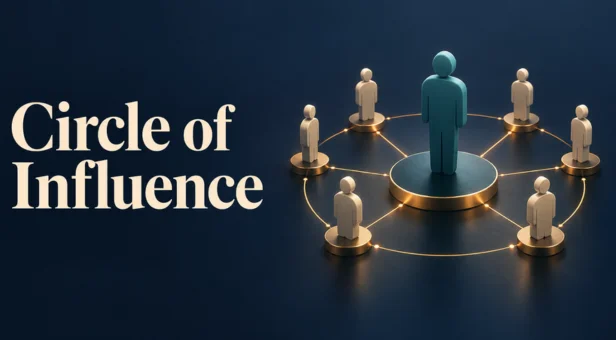
Your circle of influence includes situations, decisions, and relationships that your actions can meaningfully affect. Focusing there helps you spend less energy worrying about outcomes you cannot control. It also gives you clearer next steps when work or life feels uncertain.
Direct answer: The circle of influence represents things you can affect through your choices, actions, communication, preparation, and relationships. You may not control the final outcome. However, you can take useful actions that improve your chances of a better result and keep your attention on productive work.
| Key idea | Practical meaning |
|---|---|
| Circle of control | Things you can decide or do directly |
| Circle of influence | Things you can affect but cannot fully determine |
| Circle of concern | Things you care about but cannot meaningfully change |
| Best focus | Actions inside your control and influence |
| Main benefit | Less wasted attention and clearer priorities |
| Useful for | Work, leadership, relationships, planning, and personal goals |
Key Takeaways
- Focus first on choices and actions you directly control.
- Identify people, decisions, and outcomes you can reasonably influence.
- Accept that some important issues will remain outside your reach.
- Convert worries into specific actions whenever possible.
- Review your circles whenever circumstances or responsibilities change.
What Is the Circle of Influence?
Stephen R. Covey popularized this idea in The 7 Habits of Highly Effective People. His Habit 1 framework encourages people to act proactively instead of reacting to outside conditions. In this view, proactive people focus on the areas where they can act. The basic model uses two nested circles. The larger Circle of Concern contains everything that matters to you. The smaller inner area contains concerns where your choices or actions can make a difference.
Modern versions often add a separate Circle of Control. That addition creates three useful categories for everyday decisions. It also makes the framework easier to apply at work.
Circle of Control vs. Influence vs. Concern
The three categories differ mainly by how much direct power you have. Confusing them can lead to unnecessary frustration. Separating them helps you choose an appropriate response.
| Category | What belongs there | Workplace example | Best response |
|---|---|---|---|
| Control | Your own actions and choices | Preparing a presentation | Make a plan and complete the work. |
| Influence | Outcomes you can affect | Getting support for a proposal | Build evidence and communicate clearly. |
| Concern | Matters you cannot decide | A competitor’s strategy | Monitor it without becoming distracted. |
Your control includes your preparation, priorities, behavior, effort, and communication. These areas deserve immediate attention because you start with action. Clear personal goals can also strengthen that focus. Marketinic’s guide to boosting productivity discusses goal setting, organization, and progress tracking. Those habits fit naturally inside the control category. They turn broad intentions into actions you can complete.
Influence works differently because another person or system affects the result. You can present evidence, build trust, ask questions, or suggest alternatives. You cannot guarantee how another person will respond. Concern includes conditions that matter without offering a useful direct action. Examples include economic trends, past decisions, weather, or another person’s private thoughts.
These issues deserve awareness, but they should not consume your working attention.
Why Focusing on Influence Improves Your Effectiveness
Attention is limited during any workday. Time spent replaying an uncontrollable problem leaves less time for useful action. A better question is, “What can I do from here?” This shift encourages proactive behavior rather than passive frustration. Covey’s framework suggests that focusing on actionable areas can gradually increase a person’s influence. Strong performance and reliable communication can create new opportunities to shape future decisions.
The effect is especially useful in workplaces with shared authority. Employees rarely control every deadline, budget, policy, or stakeholder decision. They can still influence outcomes through preparation, relationships, evidence, and consistent follow-through. Leaders can use the same principle when organizational goals feel distant.
Marketinic’s article on aligning HR strategy with organizational goals emphasizes connecting daily responsibilities with broader objectives. That connection helps employees identify where their work can produce meaningful results.
Examples From Everyday Work
Imagine your company announces a reorganization. You cannot decide whether senior leaders continue with the plan. You can control your preparation and influence how your team handles the transition. You might document important responsibilities, identify handoff risks, and prepare questions for management. You could also suggest a communication process for your team. Those actions do not guarantee the final structure, but they improve readiness.
Consider a job interview as another example. You control your preparation, punctuality, answers, research, and questions. You can influence the interviewer’s impression, but you cannot control the hiring decision. The same distinction works for career development. You cannot force a manager to promote you. You can improve your skills, document results, request feedback, and discuss advancement expectations.
Marketinic’s comparison of high-potential talent and high performers highlights growth, adaptability, learning, and performance. Those qualities can strengthen a person’s ability to shape future opportunities. They remain useful even when promotion timing belongs to someone else.
How to Use the Circle of Influence in 5 Steps
The exercise works best with a real situation rather than an abstract concern. Choose one problem currently taking your attention. Then work through each step without trying to solve everything at once.
- Write down the concern. Describe the situation in one clear sentence without assigning blame.
- Identify what you control. List actions, choices, preparation, communication, or habits that depend directly on you.
- Identify what you can influence. Add people, decisions, relationships, or outcomes that your actions could reasonably affect.
- Separate what remains outside your reach. Move uncontrollable conditions into the concern category instead of treating them like tasks.
- Choose one next action. Select something specific you can complete, schedule, request, prepare, or communicate.
Afterward, review whether your chosen action changes the situation. Some concerns may move between categories as conditions change. New information or stronger relationships can sometimes increase your ability to influence an issue.
A Simple Workplace Example
Suppose your manager gives your team an unclear project deadline. You cannot control the executive schedule that created the deadline. You can control how quickly you clarify the requirements. You could list unanswered questions and estimate the work involved. Then you could ask your manager to confirm priorities and acceptable trade-offs. That response creates useful information instead of extending frustration.
Your influence may grow after that conversation. A manager could revise the schedule or reduce the project’s scope. Even without a change, your team gains clearer expectations.
How to Expand What You Can Influence
Influence tends to grow through credibility rather than pressure. People listen more closely when your previous actions show preparation and reliability. Consistency can therefore matter more than formal authority. Start by keeping commitments within your direct control. When raising problems, bring useful information and suggest realistic alternatives. These behaviors make future requests easier for others to consider.
Relationships also affect your ability to shape outcomes. Listening carefully helps you understand another person’s priorities and constraints. That knowledge lets you frame suggestions around shared interests. Skills can increase influence as well. Greater expertise may earn you access to important projects or discussions. Better communication can help your ideas reach decision-makers more clearly.
Common Mistakes to Avoid

One mistake is treating influence as control. You can communicate clearly and still receive an answer you dislike. Success means taking the right action, not guaranteeing another person’s decision. Another mistake is ignoring serious concerns because they fall outside your control. Awareness still matters for risks, policies, economic conditions, and important external changes. The goal is to monitor those issues without confusing attention with action.
People also sometimes classify problems too quickly. A situation may appear completely uncontrollable until you identify one useful conversation or decision. Asking what you can affect often reveals a smaller, actionable part. Finally, avoid making the circles permanent. Your responsibilities, knowledge, relationships, and authority can change. Review the categories again when the situation changes.
Using the Framework With Teams
Teams can apply the exercise during planning sessions, project reviews, or periods of uncertainty. Start by listing the concerns affecting the group. Then sort each item based on the team’s current ability to act. Keep the discussion specific and practical. Statements such as “management never listens” are difficult to act upon. A better question asks which decision-maker needs information and what evidence might help.
The exercise can also reduce unproductive blame. Teams move attention from another department’s behavior toward their own response. That does not excuse poor decisions elsewhere. Instead, it identifies the actions still available. A team may improve documentation, clarify responsibilities, escalate a risk, or propose a different process. Those steps create movement even when broader conditions remain unchanged.
When the Framework Is Most Useful
This model works well when a problem feels larger than your available choices. It can help during organizational change, workplace conflict, uncertain projects, career decisions, and personal planning. The framework gives each concern an appropriate level of attention. It is also useful when repeated discussion produces no new action. That pattern often signals excessive focus on an uncontrollable outcome. Sorting the problem can reveal where productive effort can restart.
The method should not replace expert help for legal, financial, medical, or serious workplace issues. Those situations may require professional advice or formal procedures. The framework can still help you identify which next step is yours to take.
Frequently Asked Questions
What is the circle of influence in simple terms?
The circle of influence contains things your actions can affect, even when you cannot control the final outcome. Examples include a colleague’s support, a manager’s decision, or a team’s direction. You influence these through communication, preparation, trust, evidence, and consistent action.
What is the difference between control and influence?
Control means the decision or action belongs directly to you. Influence means you can affect an outcome that also depends on other people or circumstances. Keeping those categories separate prevents unrealistic expectations.
What belongs in the Circle of Concern?
The Circle of Concern contains issues that matter but currently offer little meaningful direct action. Examples may include national economic conditions, past events, weather, or another person’s private opinion. You can remain informed without giving these issues most of your attention.
Can your influence grow over time?
Yes, your ability to shape outcomes can change as your skills and relationships develop. Reliable work can also increase trust and access to decisions. A concern outside your reach today may become influenceable later.
Does focusing on influence mean ignoring bigger problems?
No, the framework does not require ignoring important external issues. It separates awareness from useful action. You can care about a large problem while concentrating your daily effort where it can produce results.
Put the Model Into Practice
Choose one issue that has taken too much attention this week. Sort its parts into control, influence, and concern. Then write one specific action you can complete within the next day. Repeating that habit can make difficult situations easier to approach. You will not gain control over every outcome. You can become clearer about where your effort has the greatest practical value.